My English preparation

This is the story of my English test preparation — how I improved my English level from B2 (IELTS band score 6) to C1 (IELTS band score 7.5) in about five months, entirely on my own, without a tutor or any paid lessons.
I remember the summer after my bachelor’s graduation when my classmates were actively applying for master’s programs, while I had no intention of doing so. Back then, I had plenty of reasons why I should not pursue a master’s degree, and now, 12 years later, I have just as many reasons why I should. However, I will not discuss them here, because this essay is about something else.

Several months ago, I decided to study for my master’s degree abroad. Since my wife kept reminding me about the English requirements, I first decided to check them to see how eligible I was. I looked at several universities, and it seemed that most of them required English tests with competent scores, roughly at the B2 level. I was confident that I already had that level and could easily achieve the required score by taking an English test.
Useless videos
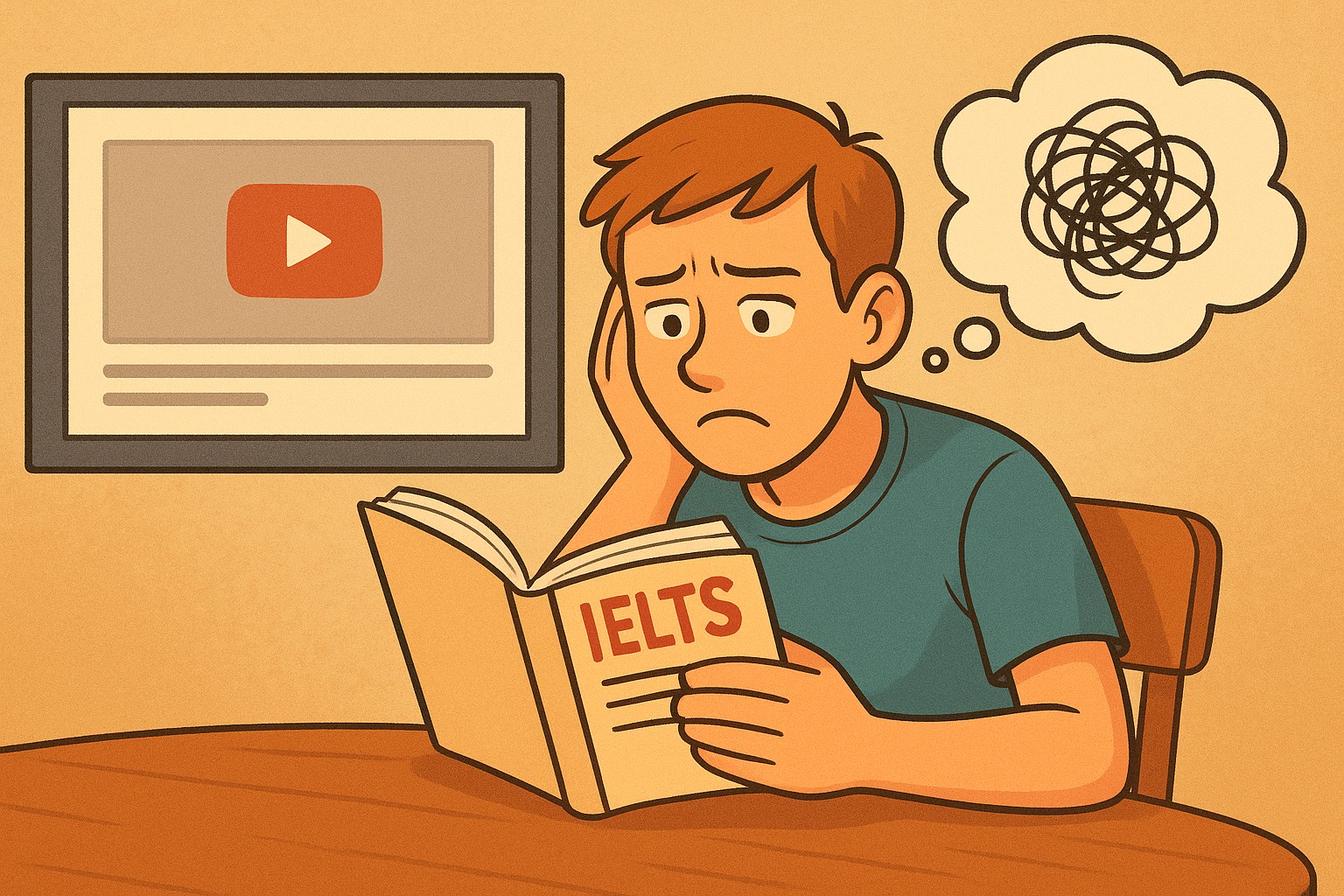
I chose IELTS almost randomly, probably because I had heard about it a few times. At first, I watched several videos on YouTube to understand the structure of the test. However, I quickly gave up, because instead of helping, most of those videos only made me feel more depressed. It seemed as if their main purpose was not to guide learners, but to sell lessons or services. I even felt that some of them intentionally overcomplicated things to make people believe they couldn’t practice on their own and needed to buy premium lessons, VIP courses, or whatever they called them. Although I did find a few good channels with useful videos, I eventually decided not to rely on YouTube and switched to using a book instead.
The Official Cambridge Guide to IELTS Student's Book
I decided to buy The Official Cambridge Guide to IELTS Student's Book and start practicing on my own. Every morning, I spent about an hour working with that book and doing its exercises. It provided tips on how to handle each type of question, which gave me some confidence at the beginning. In addition, I developed a small flashcard application to learn vocabulary.
I extracted unknown words from The Official Cambridge Guide to IELTS Student's Book and added them to my flashcard app along with their translations, pronunciations, and an associated image from the internet. Every day, I added new words and spent around one to two hours practicing them.
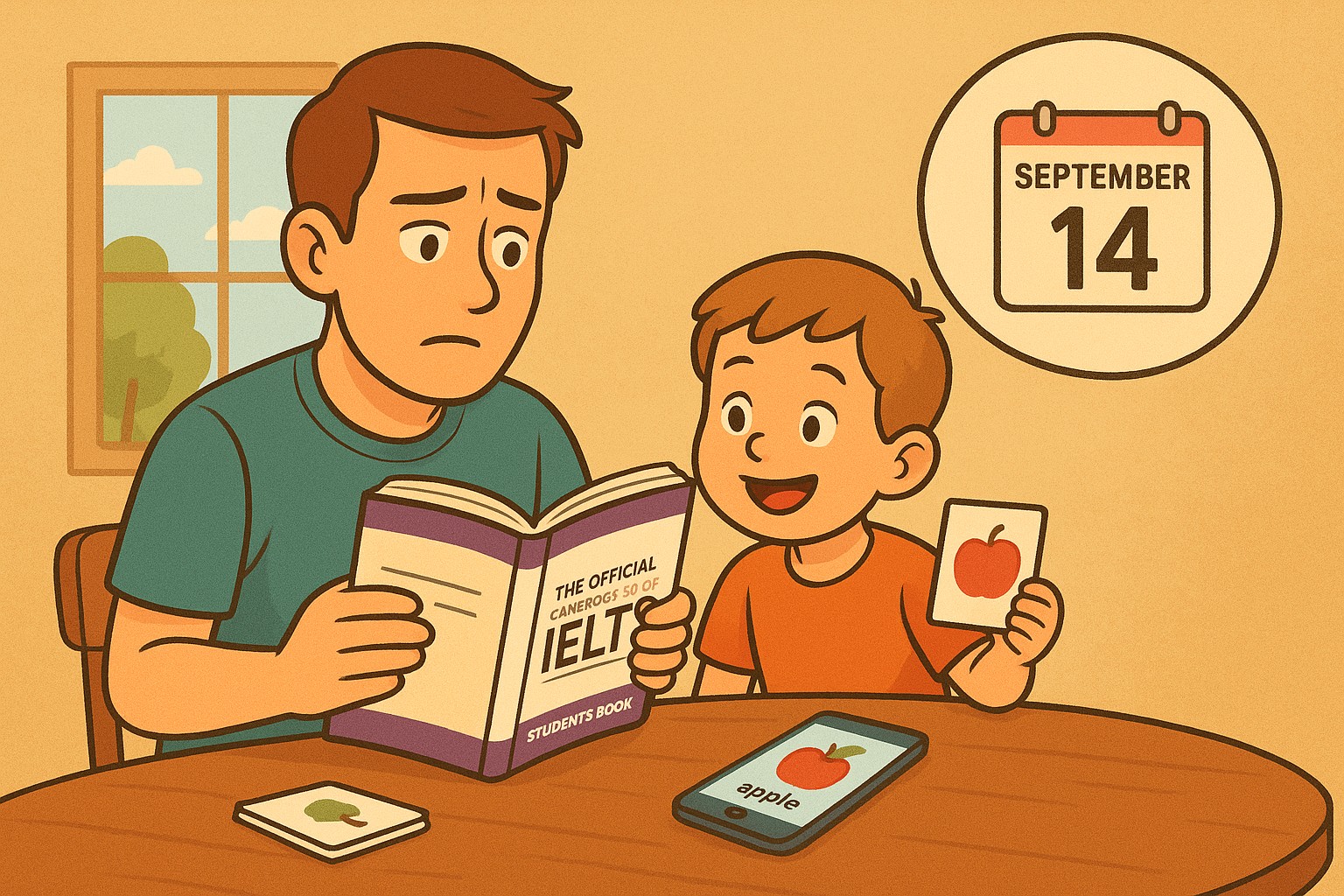
I was not alone during that time, as my five-year-old son was curious about what I was doing. He would come, sit next to me, and practice along. As I pronounced each word out loud, he listened carefully and, by connecting them with the images, managed to remember some of them. I was genuinely surprised when, after a few days, he was able to say the translations of some words before I could.
However, I felt a certain sense of uncertainty. I wasn’t sure where to start or what exactly to do. Everything seemed so far in the future, and because of that, I also felt a lack of motivation. After thinking about the problem for a while, I decided to set a clear deadline for my preparation by booking an IELTS test for September 14th, thinking that five months would be enough to get ready.
IELTS Ready Premium
After I booked the real test with the British Council and paid the fee, I was given free access to some preparation materials. The web application was called IELTS Ready Premium, and it offered many features and practice tests. It also included an AI tool that could score your speaking and writing tasks. However, I soon discovered several issues with that application.
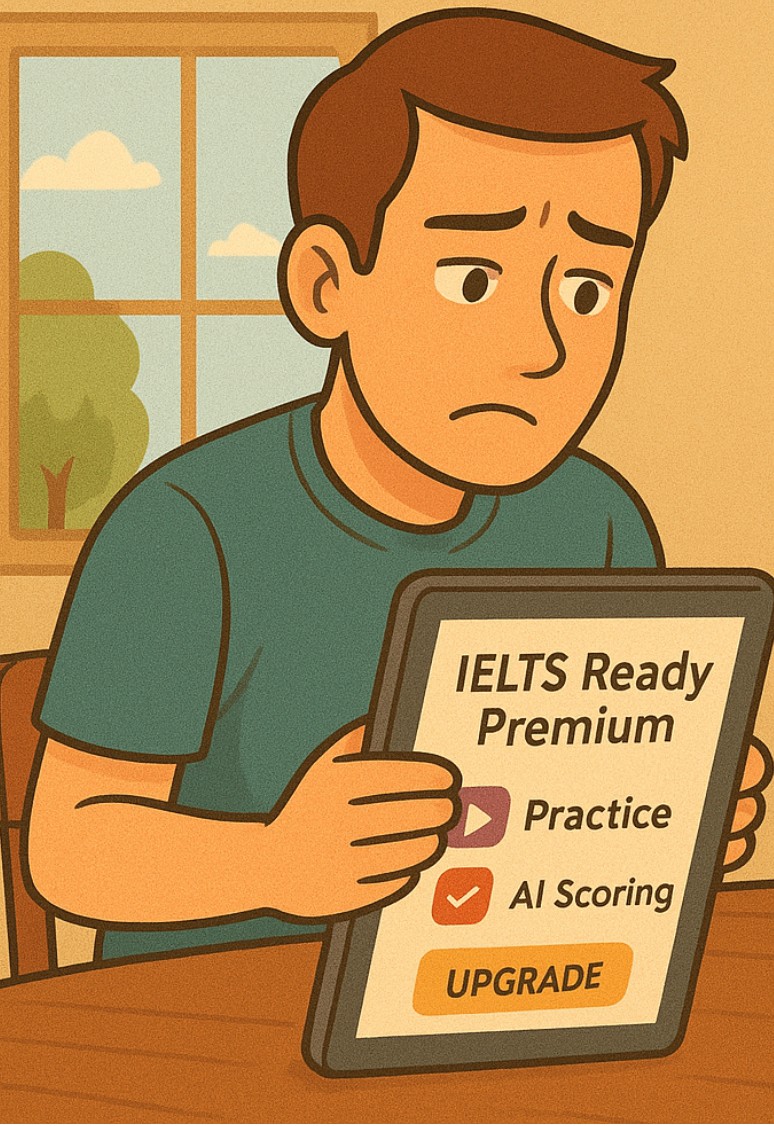
First, it wasn’t truly free as advertised. For example, the AI scoring feature could be used only once, and after that, you had to buy a package to use it again. In addition, the so-called “free” practice tests didn’t seem very realistic — the paid package even claimed to include more realistic tests, which made me doubt the quality of the free ones.
Second, I mostly used the reading and listening sections of that application, and they felt unnecessarily difficult. For instance, when I took their reading practice tests, I usually scored around 6, while in the official IELTS practice books I often scored 7 or higher.
Third, the overall design and user experience were frustrating. The interface was inconvenient — even simple actions like highlighting text or scrolling up and down felt awkward and uncomfortable to use.
So, I quickly gave up on that as well.
The learning plan
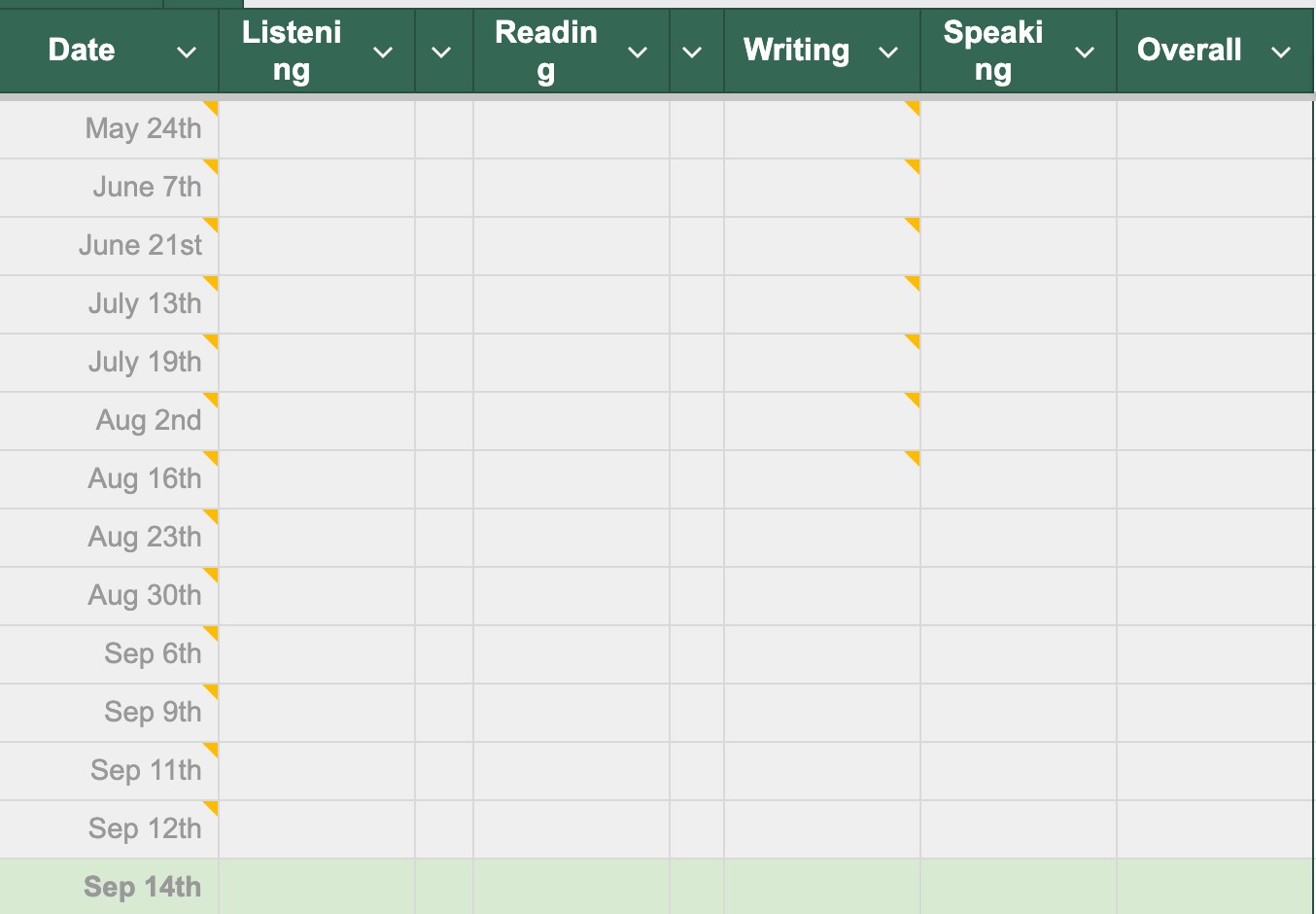
I created a schedule for mock tests — starting with one every two weeks and gradually increasing the frequency to every other day toward the end. Then, I gathered different editions of IELTS Academic Practice Test books along with their audio recordings from the internet. I collected all the books from IELTS 11 to IELTS 19, and I also bought IELTS 20 once it was published. I planned to use all these books either for mock tests or for daily practice. Specifically, I reserved IELTS 18–20 for mock tests and used the earlier ones for daily exercises.
My plan was to practice two sections of the IELTS test each day — Listening, Reading, Writing, or Speaking — in addition to learning vocabulary. I also committed to taking full mock tests according to the schedule I had set.
The first mock test
On the morning of May 24th, I went to my office and sat for a mock test. After checking the results, I was shocked at how difficult it was. Until then, I had been underestimating the difficulty of English tests and always told myself that I knew enough. But after this mock test, I realized how little I actually knew.

That day, I got an overall score of 6. For speaking and writing, I simply gave myself the minimum accepted score required by the universities where I wanted to apply. It was a wake-up call.
Practice
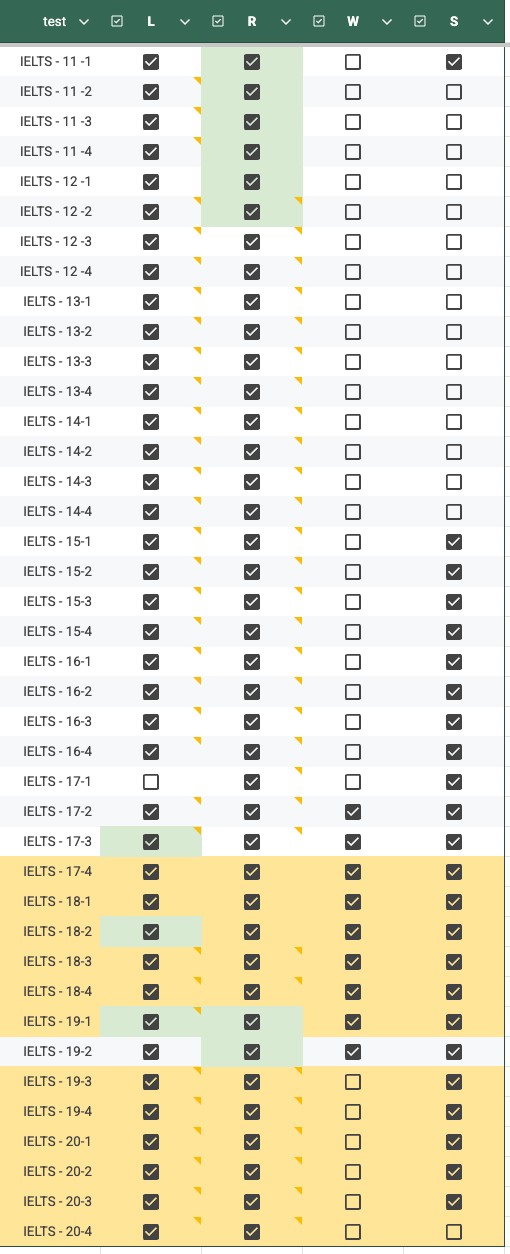
During those five months, I practiced every single day except Sundays, usually combining sections in pairs such as Listening with Writing or Reading with Speaking. In the mornings, before starting my office work, I would do Reading or Listening exercises, and during lunch breaks, I would focus on Writing or Speaking.
Reading and Listening were straightforward because I could check the answers and calculate my scores. However, for Speaking and Writing, I had no clear way to assess my performance.
For Speaking practice, I answered questions from practice tests using a speech-to-text tool and then asked ChatGPT to correct my responses. At first, I considered making up unreal stories for my answers, but after doing that a few times, I started feeling uncomfortable — almost guilty. So I decided to always tell the truth, even if I didn’t know the right vocabulary to express it.
For Writing practice, I mainly used ChatGPT, Gemini, and Lexibot to check my scores. I usually spent about an hour writing a report and an essay, and at the end, ChatGPT or Gemini would give me a score of 5.5, which made me feel quite humiliated. Lexibot, on the other hand, usually gave slightly higher scores. However, after some time, those AI-generated scores started to make me angry, and I eventually gave up practicing Writing and Speaking altogether. I decided it would be better to focus on Reading and Listening, where I could clearly track my progress without relying on unpredictable AI feedback.
During the remaining few months, I continued doing Listening tasks in the mornings and Reading during my lunch breaks. I also created an Excel table where I recorded all my scores to track my progress over time.
Vocabulary
As I mentioned earlier, I was using my own flashcard application to learn new vocabulary. However, I realized that learning words this way didn’t help me remember their spelling, which was important for the Listening and Writing tasks. So, I decided to improve my application. Instead of using simple flashcards, I developed a web-based tool that would pronounce words or their translations, and I had to type the correct spelling. If I typed the word correctly, it disappeared from the list; otherwise, it would be repeated later.
I collected new words mainly from the reading passages in the IELTS practice books I was using. I continued practicing vocabulary like this until the end of my preparation.
Mock tests
I tried to follow my scheduled dates for mock tests; however, I wasn’t always able to stick to them. Still, whenever I missed a test for any reason, I made sure to take it the following week.
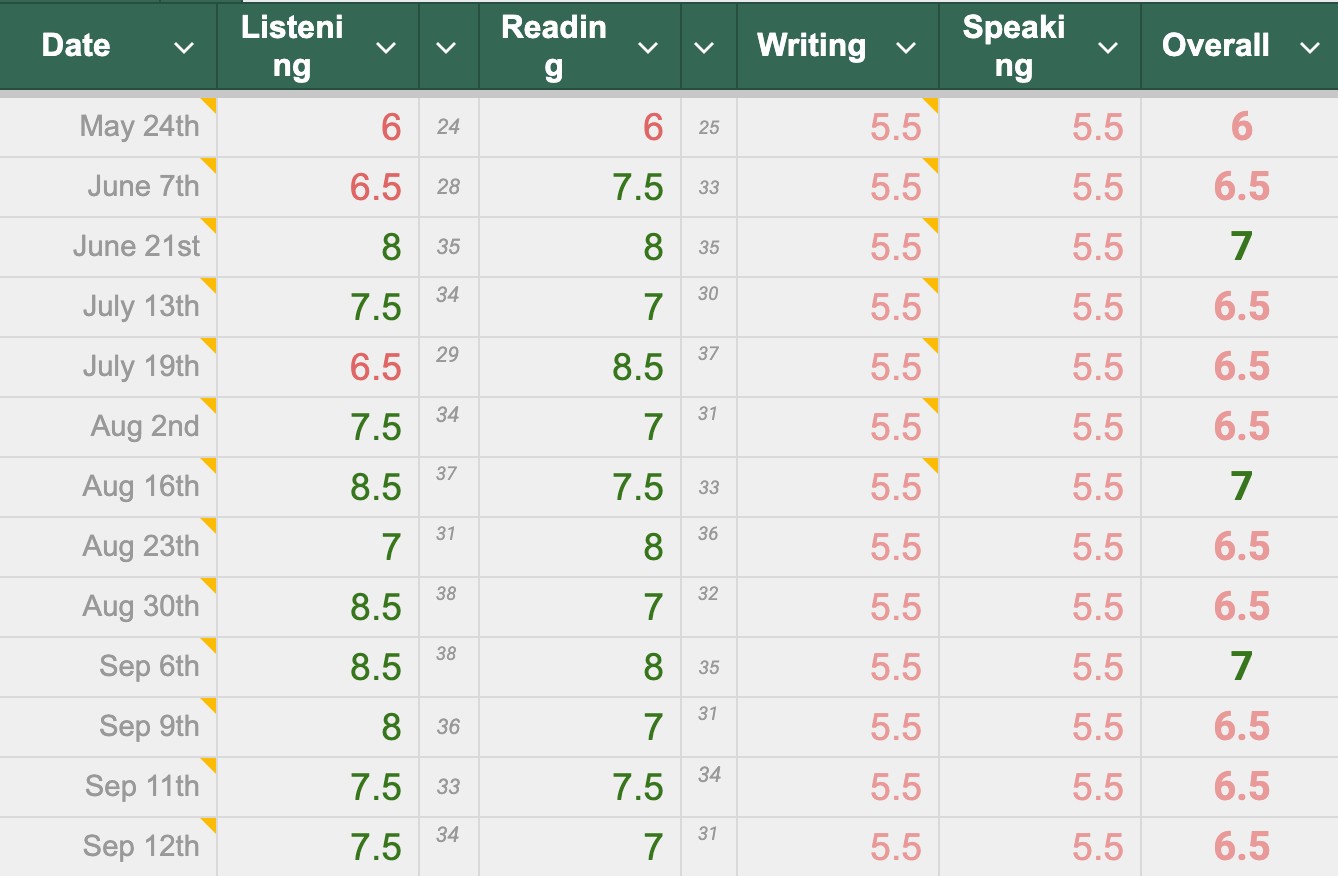
As mentioned before, my goal was to achieve an overall score of 7. I usually did my mock tests on Saturday mornings. In the beginning, I practiced all four parts of the exam, but since the AI tools kept giving me low scores for the Writing and Speaking sections, I eventually felt demotivated and decided to skip those parts until the actual test day. I recorded all my mock test results, which are shown in the table below.
Mock test days were the most humiliating days of my preparation.
I remember how terrible I felt when, during the Listening section, the speakers talked too fast or had such strange, unfamiliar accents that I couldn’t even understand what they were discussing.
I remember the complex academic texts in the Reading section, where I could only guess their meanings.
I remember how every second mattered in the Reading part, and how frustrating it was to run out of time.
And I remember the deep disappointment I felt after each mock test when my overall score turned out to be only 6.5.
The day before the test
I did nothing.
On the test day
My Speaking test was scheduled for 9:15 a.m., and the other parts were later that day at 3:30 p.m. There was nothing particularly special about that day — everything felt quite normal. After all, I had been practicing these tasks every day for several months.

My Speaking examiner was a young woman. At first, I felt a bit anxious, but after the first question, I relaxed. I managed to do the Speaking test better than I had expected.
The other parts also went quite normally, although the Listening and Reading sections felt slightly more difficult compared to the older IELTS practice books.
After the test, I felt that regardless of the score I would get, I had accomplished something significant. For five months, I had been fully focused on preparation — and now, I finally felt free.
Results
The next day, I received an email with my test results. During that one day of waiting, I couldn’t stop doing calculations in my head — thinking things like, if I get 6.5 for Speaking, 7.5 for Reading, and maybe 7 for Listening… then my overall score might be 7.
I was sitting with my laptop, with my wife and children next to me. My wife asked when I thought the results would be sent, and almost automatically, I opened my email. There it was — a message received just a few minutes earlier with the subject line “Your IELTS results.” I clicked the link, logged in, and was completely shocked.
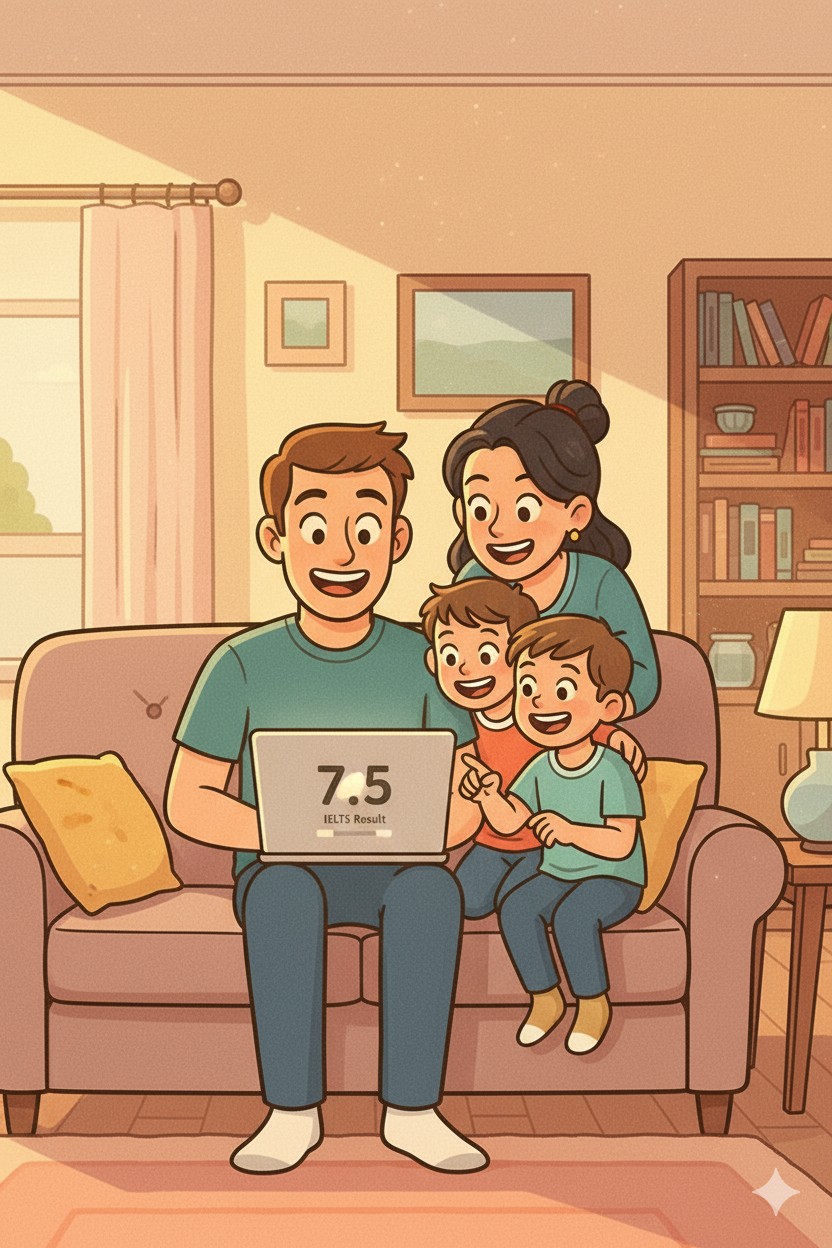
I had been expecting an overall score of 6.5 or, in the best case, 7.0 — but it turned out to be 7.5.
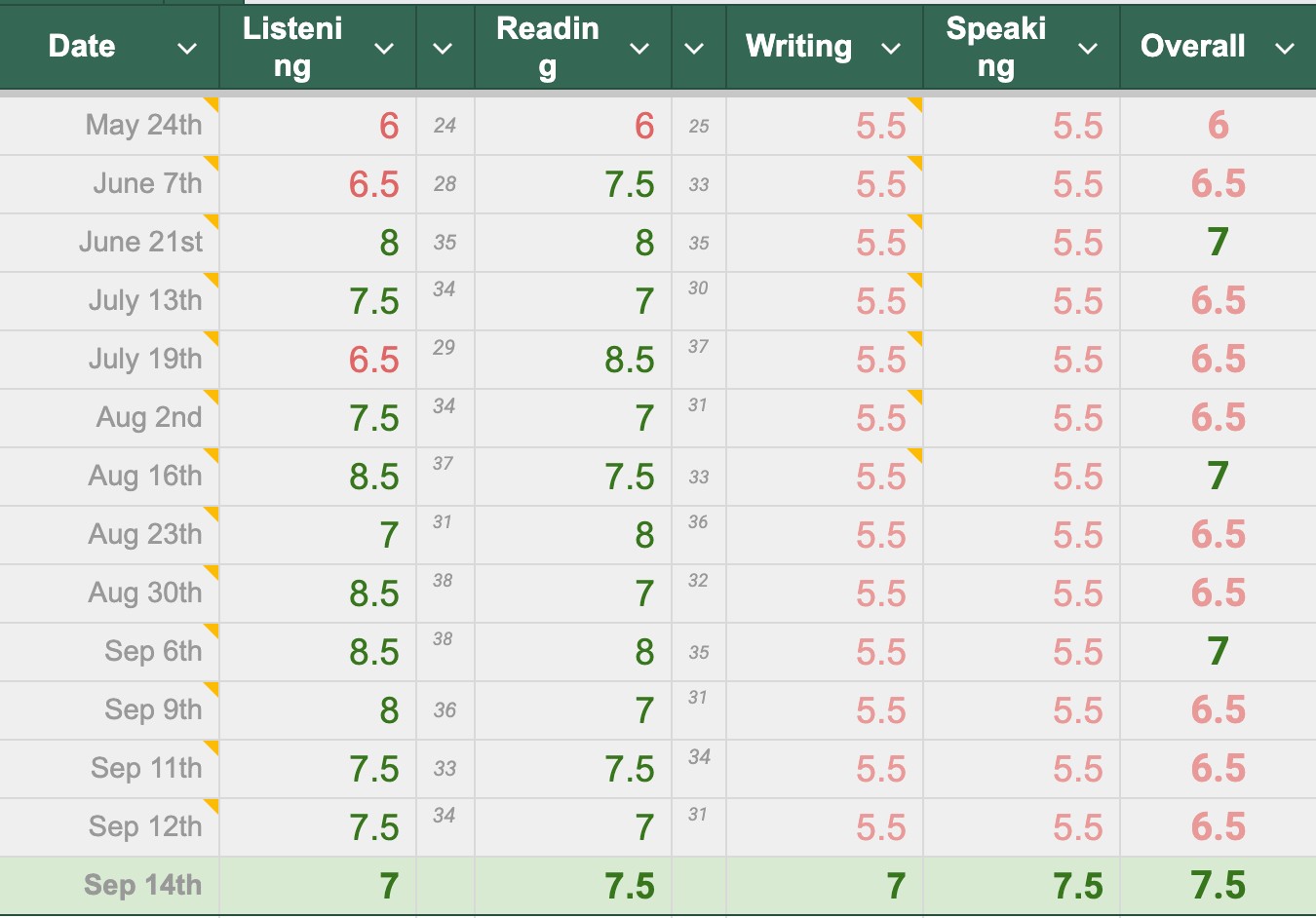
I realized that I had been right about my Reading and Listening results, as I got approximately what I was expecting. However, I had clearly underestimated my Speaking and Writing skills, because I scored much higher than 5.5 in both.